
Students’ Scientific Research Activities
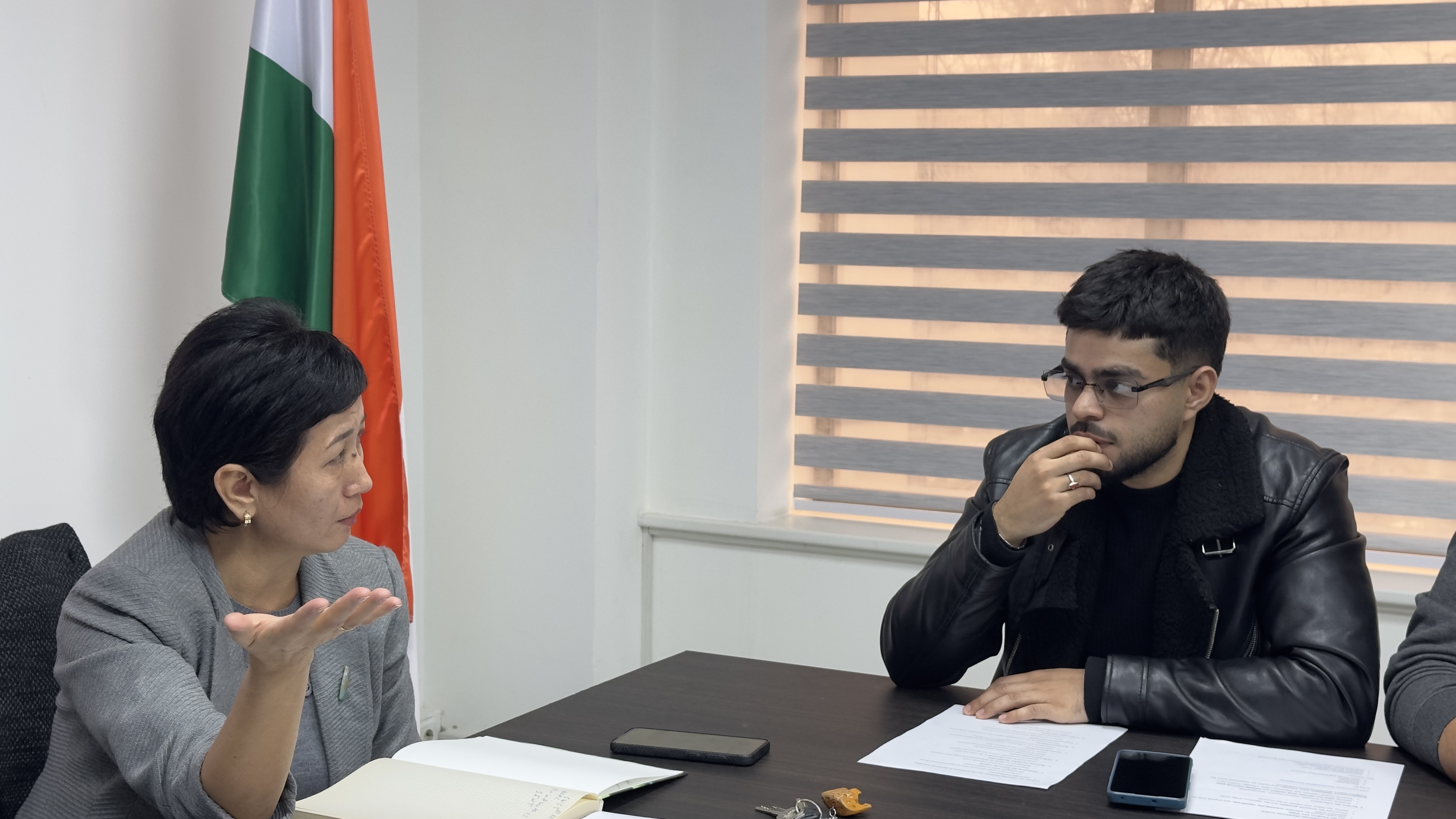
On December 15, 2025, a meeting dedicated to Students’ Scientific Research Activities was held at Royal Metropolitan University. It was organized by the Education Team under the leadership of Asel Saparova, Vice Rector for Scientific Affairs, and PhD Ainagul Jalilova, Head of the Department of Morphological and Fundamental Disciplines.
The primary objective of the meeting was to provide students with essential information on scientific research, the structure of academic articles, and guidelines for publishing research papers in recognized academic journals.
During the session, students were encouraged to share their ideas for potential research topics. Many students presented unique and innovative proposals, demonstrating a strong interest in research activities.
Asel Saparova, Vice Rector for Scientific Affairs, informed about the 63rd International Scientific and Practical Conference “KSMA Science Days – 2026” of the Kyrgyz State Medical Academy named after I.K. Akhunbaev, which will be held on April 9–10, 2026, in Bishkek, Kyrgyzstan. She emphasized the importance of thorough preparation and encouraged students to actively participate in the event.
Ainagul Jalilova informed the students about the International Scientific and Practical Conference entitled “Current Issues of Medical and Biological Sciences and Education” dedicated to the 80th anniversary of the birth of a prominent figure in science and healthcare — Honored Worker of Science of the National Academy of Sciences of the Kyrgyz Republic, Honored Healthcare Worker of the Kyrgyz Republic, Candidate of Medical Sciences, and Senior Research Fellow R. M. Toychuev. The conference will be held in Osh, Kyrgyzstan. It is scheduled for December 17–18, 2025, and will be conducted in a hybrid format, combining in-person (offline) and remote (online) participation. She said we should prepare our publications for submission.
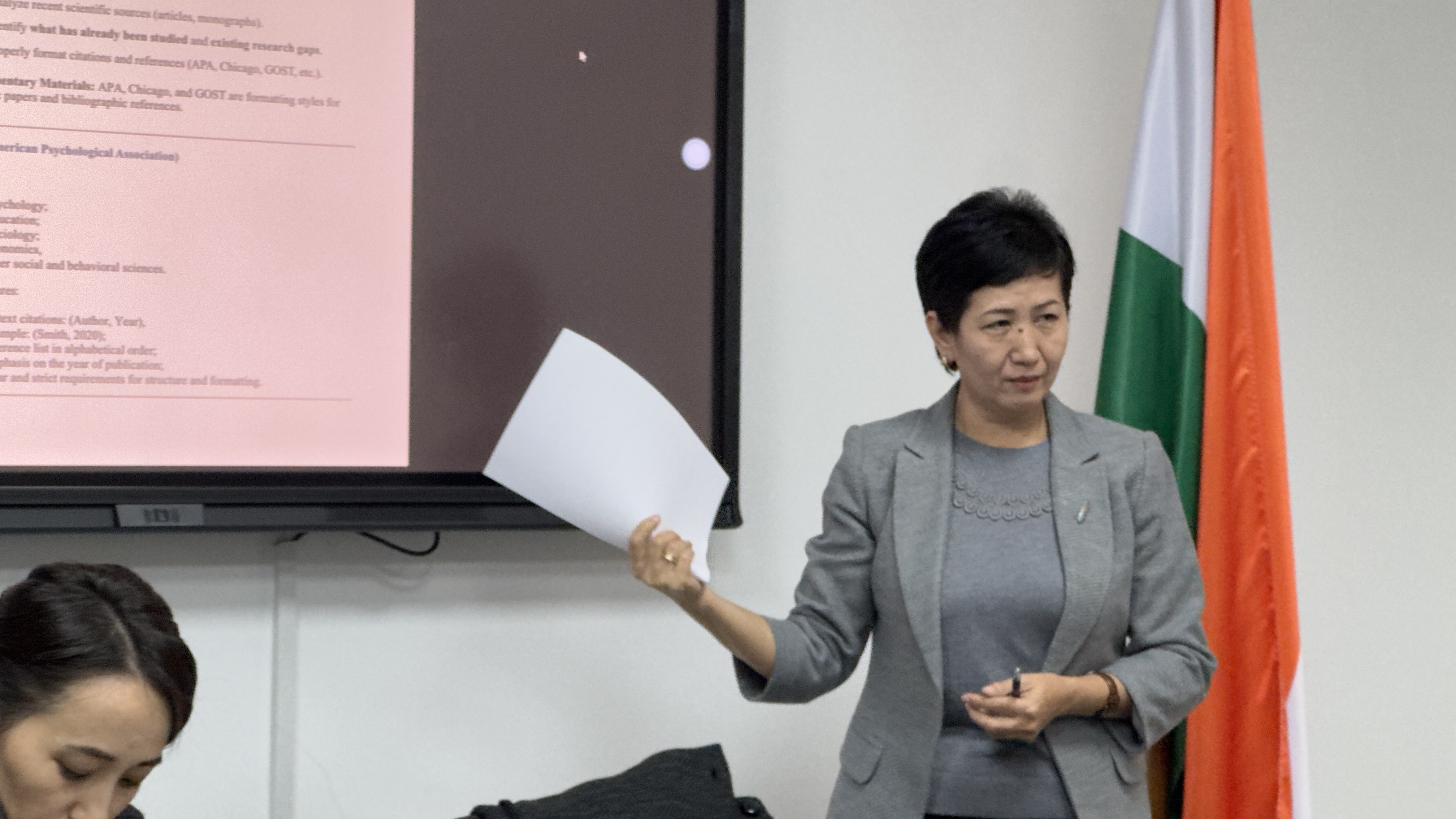
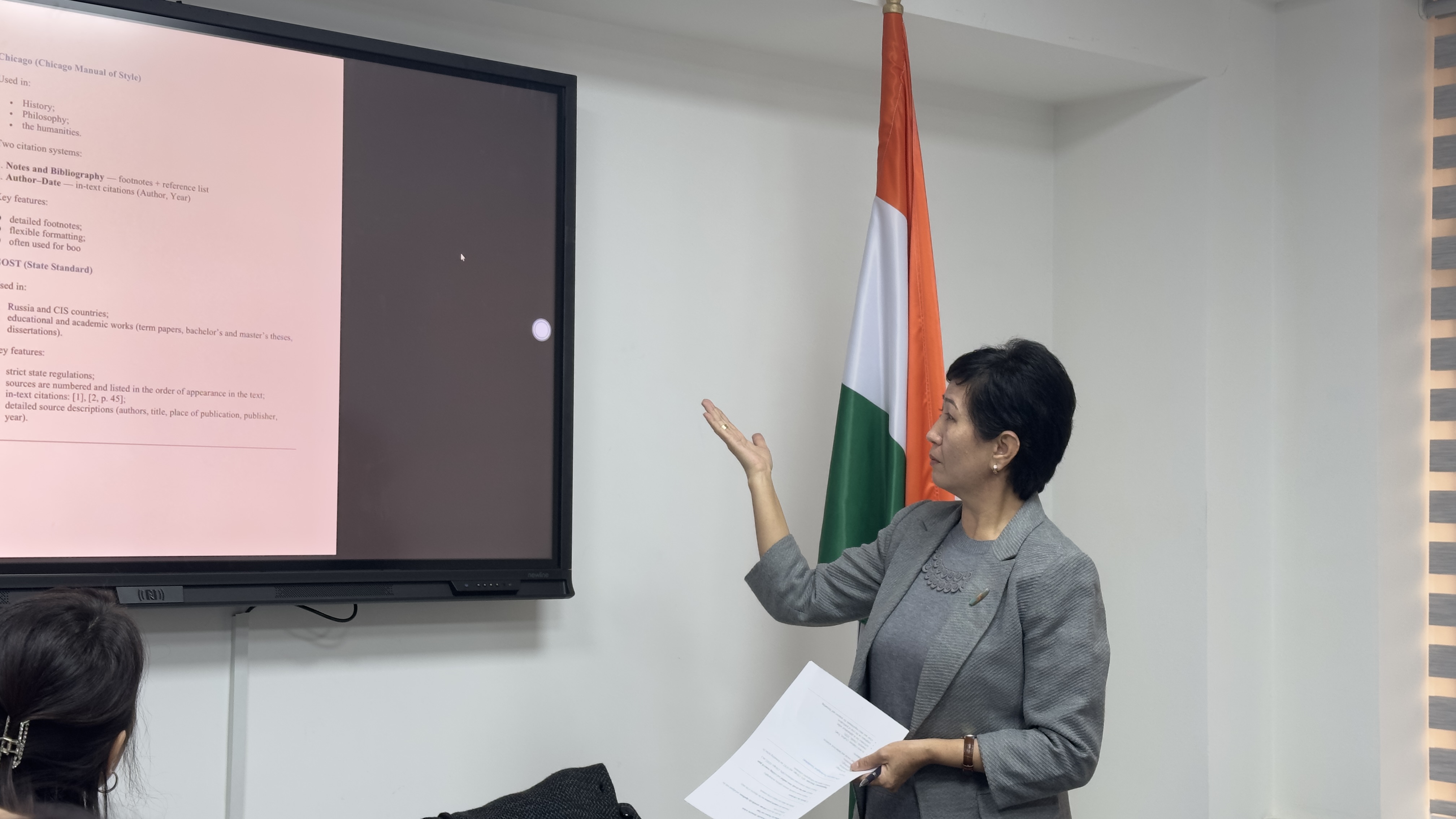
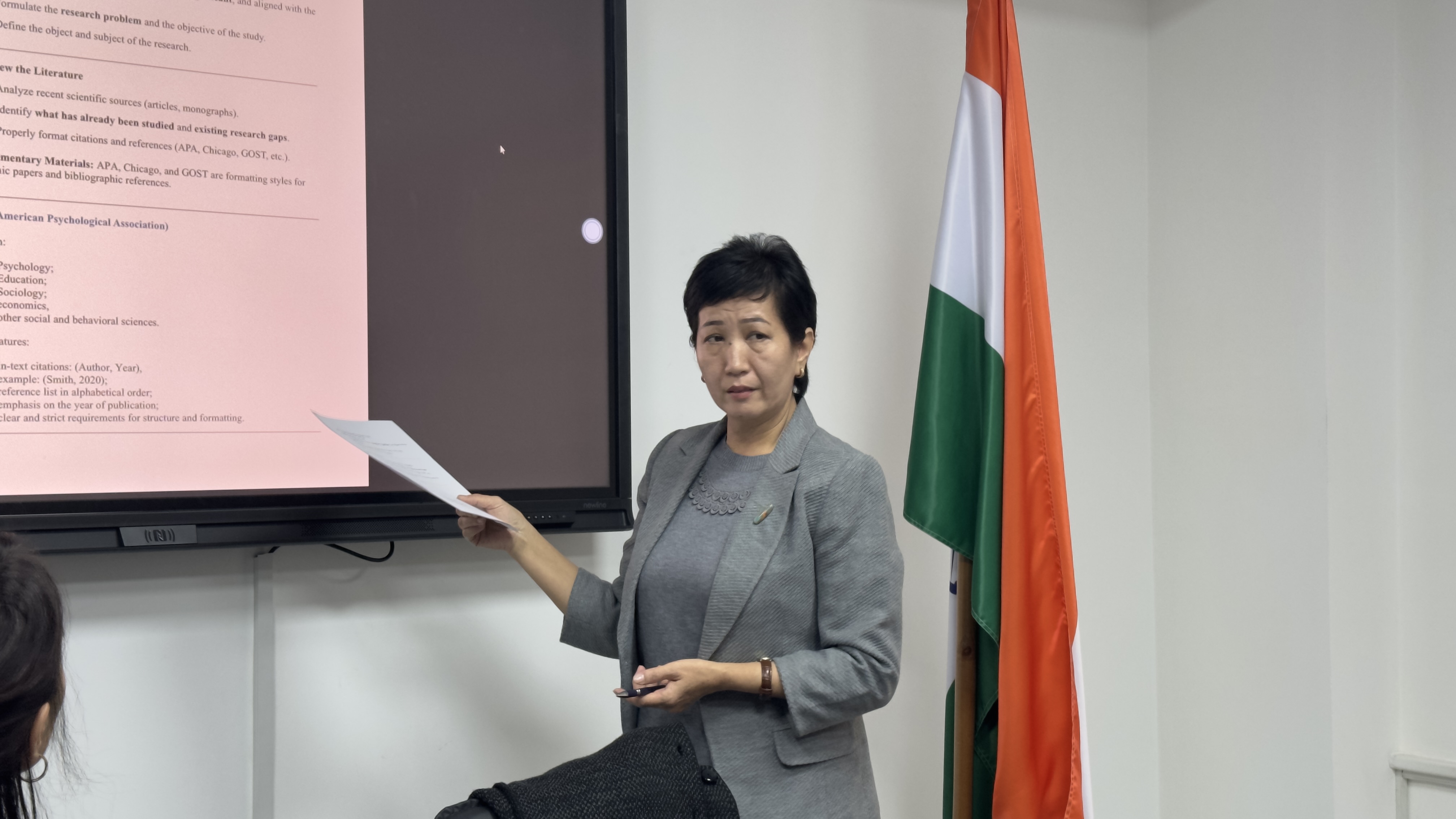
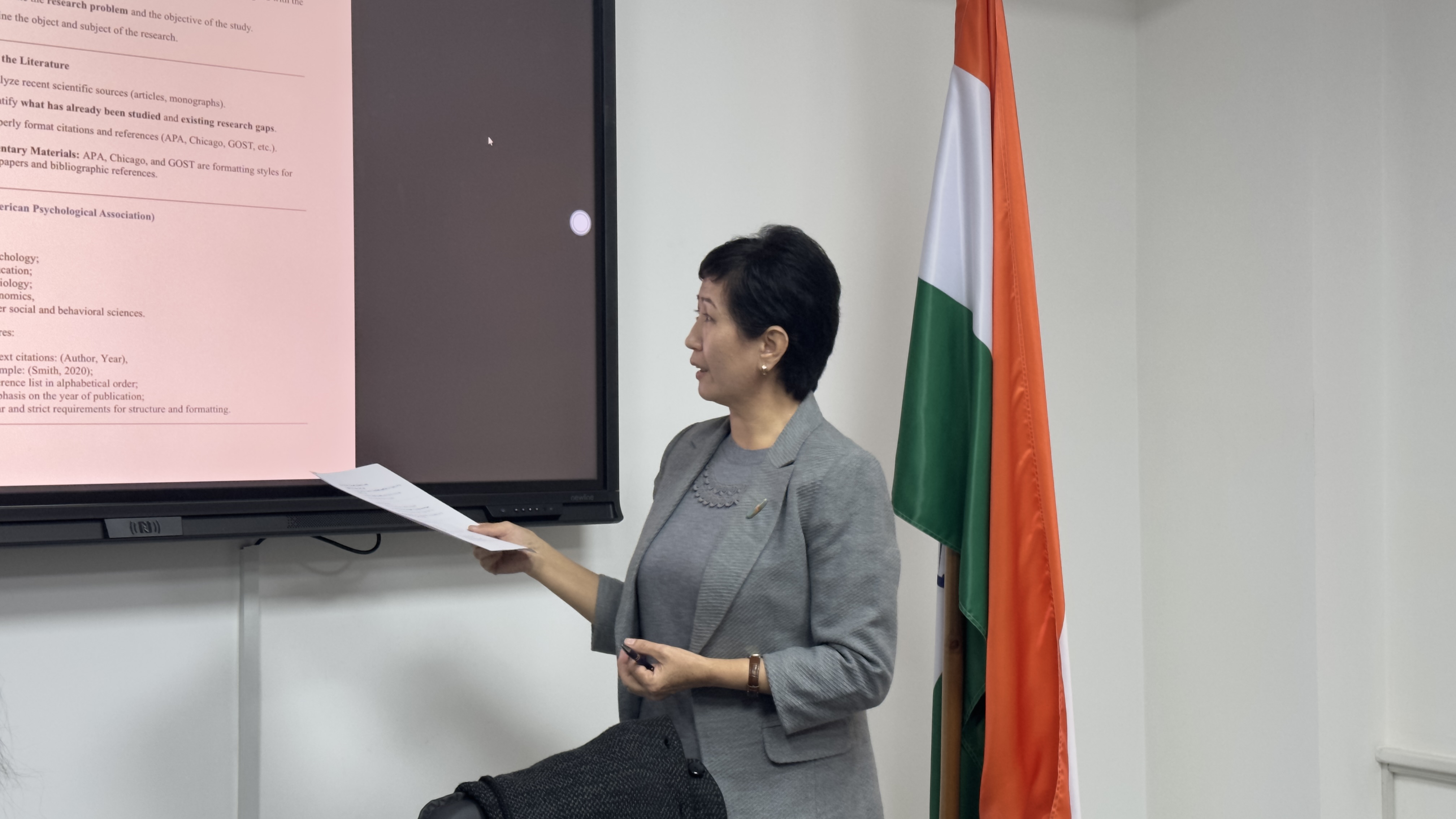
During the meeting, Ainagul Jalilova presented materials for the students on the topic “How to Write a Scientific (Research) Article?”.
Materials Presentation:
- Define the Purpose and Topic
- The topic should be relevant, scientifically significant, and aligned with the journal’s scope.
- Formulate the research problem and the objective of the study.
- Define the object and subject of the research.
- Review the Literature
- Analyze recent scientific sources (articles, monographs).
- Identify existing research gaps.
- Properly format citations and references (APA, Chicago, GOST, etc.).
Supplementary Note:
APA, Chicago, and GOST are formatting styles used for academic papers and bibliographic references.
Referencing Styles:
APA (American Psychological Association)
Used in:
- Psychology
- Education
- Sociology
- Economics
- Other social and behavioral sciences
Key features:
- In-text citations: (Author, Year)
Example: (Smith, 2020) - Reference list in alphabetical order
- Emphasis on the year of publication
- Clear and strict formatting requirements
Chicago (Chicago Manual of Style)
Used in:
- History
- Philosophy
- Humanities
Two citation systems:
- Notes and Bibliography (footnotes + reference list)
- Author–Date (in-text citations)
Key features:
- Detailed footnotes
- Flexible formatting
- Often used for books and historical sources
GOST (State Standard)
Used in:
- Russia and CIS countries
- Educational and academic works (term papers, bachelor’s and master’s theses, dissertations)
Key features:
- Strict state regulations
- Sources numbered in order of appearance
- In-text citations: [1], [2, p. 45]
- Detailed source descriptions
Brief Comparison
| Style | Field of Use | Citations |
| APA | Social sciences | In-text (Author, Year) |
| Chicago | Humanities | Footnotes / Author–Date |
| GOST | Russia & CIS | Numbering [1] |
- Structure of a Scientific Article
A typical scientific article includes:
- Title
- Concise and accurately reflecting the study’s content
- Abstract
- 150–250 words: purpose, methods, results, and novelty
- Keywords
- 5–8 relevant terms
- Introduction
- Relevance of the topic
- Research objectives and tasks
- Scientific novelty
- Methods
- Description of methodology, sample, and analytical tools
- Results
- Presentation of data, tables, and figures (without interpretation)
- Discussion
- Interpretation of results
- Comparison with previous studies
- Conclusion
- Key findings
- Theoretical and practical significance
- References
- Only sources cited in the article
- Writing the Text
- Use an academic writing style: clarity, logic, and objectivity
- Avoid informal language and personal opinions
- Maintain consistent terminology
- Review and Revision
- Check coherence and logical flow
- Ensure originality (plagiarism check)
- Confirm compliance with journal requirements
- Preparation for Publication
- Study the journal’s author guidelines
- Provide metadata: author information, ORCID, affiliation
- Write a cover letter
Supplementary Materials
ORCID (Open Researcher and Contributor ID)
ORCID is a unique digital identifier for researchers consisting of a 16-digit number (e.g., 0000-0002-1825-0097).
It helps distinguish researchers with similar names and is used when submitting articles, applying for grants, participating in conferences, and managing research profiles in databases such as Scopus and Web of Science.
ORCID can be considered a researcher’s “passport” in the academic world.
Affiliation
Affiliation refers to the institution with which an author is associated at the time the research was conducted or published. It typically includes the name of the organization, department or faculty, city, and country.
Helpful Tips
- Write a draft first, then revise
- Use academic databases (Scopus, Web of Science, Google Scholar)
- Ask a supervisor or colleague to review the manuscript
Meeting Facilitators:
Asel Saparova, Vice Rector for Scientific Affairs, with significant experience in academic research and currently pursuing her PhD studies.
Ainagul Jalilova, PhD in Biology, Head of the Department of Morphological and Fundamental Disciplines, author of numerous scientific publications indexed in Scopus and Web of Science, with extensive experience in participating in international research projects, conferences, training courses, seminars, summer schools, etc., supported by various organizations (IAEA, NATO, UNESCO, CRDF, etc.), and a participant in various international projects (IAEA, RFBR–KIAS).
Topics Discussed:
- Introduction to Research
- Referencing and Formatting Styles (APA, Chicago, GOST)
- Structure of a Research Article
- Preparation of Articles for Publication
- ORCID (Open Researcher and Contributor ID)
- Students’ Research Topic Proposals
Attendance:
- Asel Saparova — Vice Rector for Scientific Affairs
- Ainagul Jalilova — Head of the Department of Morphological and Fundamental Disciplines
- Hamid Shujja Zahid — Student Council President
- Ayaan Imtiyaz — Student Council Vice President of Education
- Alia Naz — Student Council General Secretary
- Hiba Basharat — Student Council Vice President of Social Media
- Tayyab Naveed — Student Council Head of the Education Team
- Hamza Arif — Student Council Head of the Research Team
- Areen Bhatti — Student Council Head of the Hosting Team
- Azhar Jamil — Student Council Head of the Academic Team
- Sirat Un Nisa — Student Council Head of the Content Creator Team
Conclusion
The meeting was highly appreciated by students, as it significantly broadened their understanding of research methodology and the academic publishing process. The session began with a presentation of Ainagul Jalilova’s academic and research experience, followed by an interactive discussion with students on research topics and future academic opportunities.
Photo Gallery